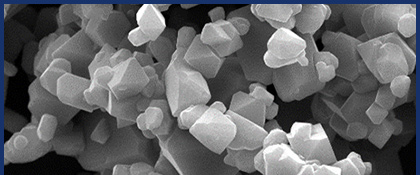
Materials

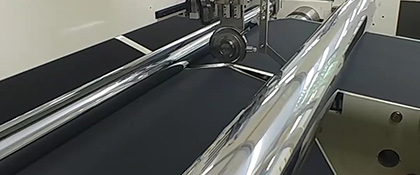
Electrodes


System Engineering
1. High Compaction Density (Self-Densifying) LFP Structure
Top Material achieves higher compaction density compared to
conventional LFP through precise control of particle distribution,
surface morphology, and porosity.
This maximizes the loading of active material within the electrode,
directly contributing to increased energy density,
reduced cell cost, and improved Wh/kg at the pack level.
2. Proprietary Precision Process Technology and
High-Efficiency Additive Engineering
Top Material possesses proprietary process technologies
that allow precise control of particle size, shape, surface structure,
and crystallinity to maximize LFP performance.
These technologies are designed to simultaneously enhance compaction density,
power output, cycle life, and high-temperature stability,
while precisely meeting the specifications required during electrode manufacturing.
In addition, through advanced additive engineering,
Top Material can finely adjust Fe-site,
P-site, and surface stability, enabling: Reduced internal resistance (DCIR)
▪ Improved cycle life through enhanced power characteristics
▪ Surface decomposition suppression
▪ High-temperature cycle stability
Based on these process and additive technologies,
Top Material can provide a wide range of LFP specifications tailored to customer needs,
resulting in higher capacity, superior power performance,
and longer cycle life compared to industry standards.
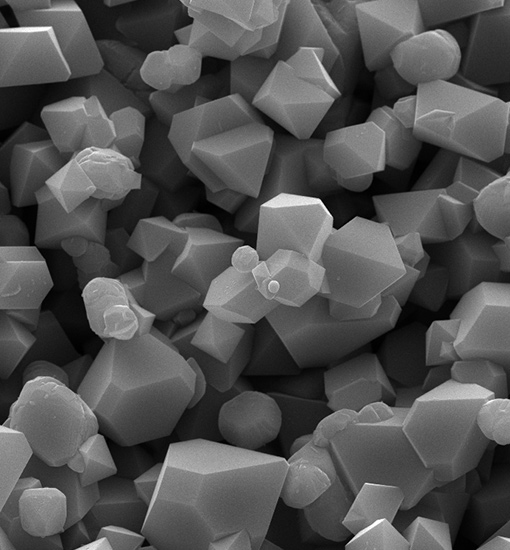
Top Material supplies LFP in two forms—spherical and milled—tailored to customer electrode processes and battery applications
(EV, ESS, power tools, etc.).
| Spherical LFP | Crushed (Milled) LFP |
| Compatible with co-mixing in existing NCM lines or blending with fully milled LFP depending on electrode design |
Delivers the highest capacity performance when used alone |
| Excellent electrode coating and slurry stability | High compaction density significantly improves cell energy density |
| Superior power performance during high-rate charge/discharge | Versatile for both ESS and EV applications |
| Outstanding C-rate capability | Cost-competitive |
▪ High Compaction Density → Increases electrode loading and improves cell Wh/kg
▪ Superior Power Performance → Stable high-rate charge/discharge
▪ High Capacity → Better utilization of theoretical capacity
▪ Long Cycle Life → Excellent performance under high- and low-temperature cycling
▪ Safety → Enhanced thermal and structural stability inherent to LFP
▪ Eco-Friendly Process → No harmful chemicals, minimal wastewater
▪ Customer-Tailored Solutions → Choice of spherical or milled LFP, with co-mixing options